Science and Social Media - Part IV (the end)

After looking in a previous post at some of the technological reasons behind the success of social networks, let us now consider what the new wealth of this social era is, and what opportunities and risks it creates for science. 4 The new wealth: data and the stream In the scenario described so far, the new wealth consists partly of data and their ownership, and partly of the possibility of sharing them and keeping this continuous flow, the so-called stream, constantly updated. Data ownership can be fairly easily connected to economic wealth: statistical and IT tools for exploring data (data mining) make it possible to extract valuable information that can be used strategically in economic contexts. This action is also promoted at intercontinental level, in the United States and Europe, through initiatives that spread open data policies, meaning policies that encourage opening data to everyone. See the two Italian examples at national and regional level. The data flow, or stream, is equally valuable because it attracts a large number of users: this is what happens on Facebook when users check their wall for friends’ updates. This guarantees a constant user presence, to whom advertising messages can be delivered and who can also be directed toward content of interest, such as advertising or online shopping sites. In this context, we will focus on the aspects most closely related to science. ...


19 dicembre 2015 · Daniele Bailo

Science and Social Media - Part III

After seeing in a previous post what social networks are and some of the social reasons behind their success, let us now look at some of the technological reasons for their enormous spread. 3 Technological reasons behind the success of social networks The needs described above could find at least partial satisfaction also, and above all, thanks to a technological evolution unprecedented in human history, which made the spread of SNs possible through: ...

17 dicembre 2015 · Daniele Bailo

Science and Social Media - Part II

After introducing the topic in a previous post, let us move to the core of the issue: what social networks are and the social reasons behind their success. What is a social network? A social network (SN from now on), or social network platform, is an IT platform generally accessible through the World Wide Web (www) that allows users and groups of users to interact by sharing information and data. These networks are usually thematic, for example dedicated to music, science, friendship, and so on, although the most widespread ones today, such as Facebook, tend to integrate different users and interests. ...

15 dicembre 2015 · Daniele Bailo

Working with an Enlightened Mind (not an ENEL advertisement) (EGU #3)

This photo deserves to be at the center of the page. It is memorable. Why? I will explain immediately: anyone with a scientific eye will already have understood that I was presenting a poster. I was at EGU in Vienna. The guy next to me, wearing purple trousers, a black shirt, a black silk scarf with white doves, and a biker-style jacket, and I assure you that the hair is not a wig but real 1970s hair, may look like a hippie picked up at the last minute from the city streets. In reality, he is a great mind, and is seriously at risk of becoming my IT guru: his name is Keith J. Jeffery. He is a true heavyweight in European IT architectures, with many titles. An excerpt from one of his bios says: “Keith Jeffery is currently Director of IT and International Strategy of STFC (Science and Technology Facilities Council), based at the Rutherford Appleton Laboratory (RAL) in the UK.” He also holds various other titles, director here, president there, has worked on Grid, now works on Cloud, and many other interesting things that I will skip. ...

16 aprile 2013 · Daniele Bailo

Google: the Rocco Siffredi of Technology (EGU #2)

What does Rocco Siffredi have to do with Google and technology? The common point is clear: the display of enormous power, sexual in one case and computational in the other. I leave it to the reader to guess which one is Google and which one is Siffredi. The parallel appeared very clearly in my mind when I listened to a talk here at EGU (read this post to discover what EGU is) about Google’s new search and computation engine for Earth sciences, EarthEngine. IMAGE By Niccolo Caranti (Own work) [CC BY-SA 4.0 (http://creativecommons.org/licenses/by-sa/4.0)], via Wikimedia Commons ...

13 aprile 2013 · Daniele Bailo

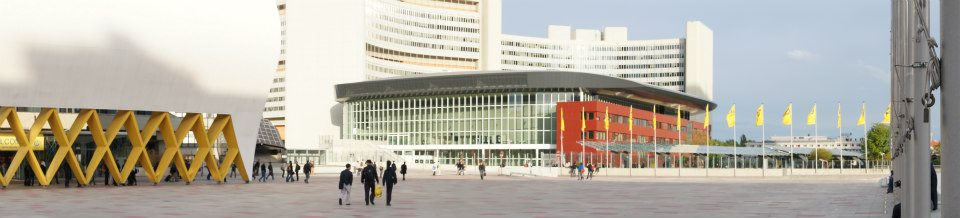
A Congress of Geoscientists? (alias: EGU #1)

I have various friends and acquaintances outside my work circle with whom I often end up talking about my activities. Every time, surprisingly, I discover how hard it is to explain what happens at these conferences or meetings I sometimes attend. Having already given up on answering the fatal question “what do you do for a living?” when asked by non-specialists over 70, I now try to explain how a congress such as EGU works. I once tried saying: “I work in EPOS, a European project dealing with the integration of research infrastructures for Earth sciences; now I work on metadata collection for the creation of a catalogue that will allow data discovery and integration.” The result was bewildered looks, mechanical “ah, interesting” replies, and other scenes I will spare you. ...

10 aprile 2013 · Daniele Bailo