The three components to ENVRI-hub success

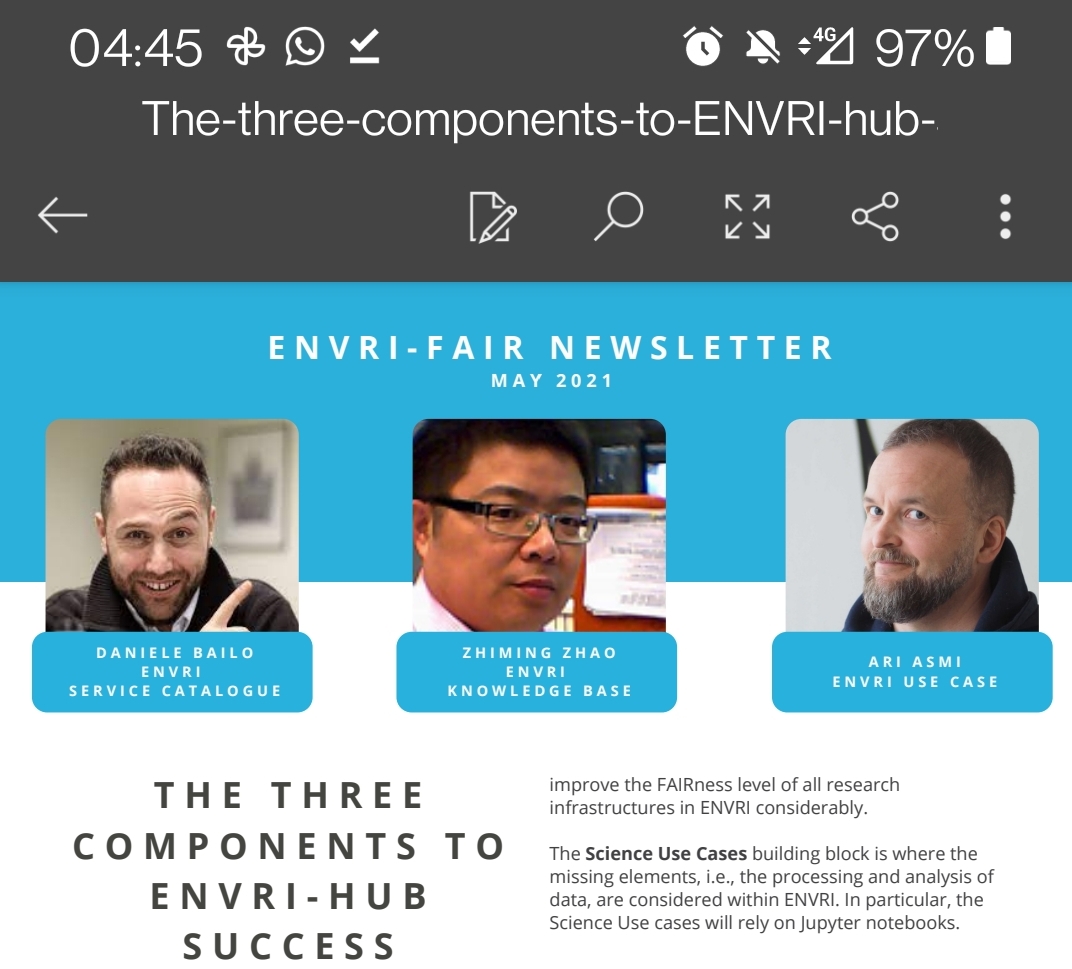
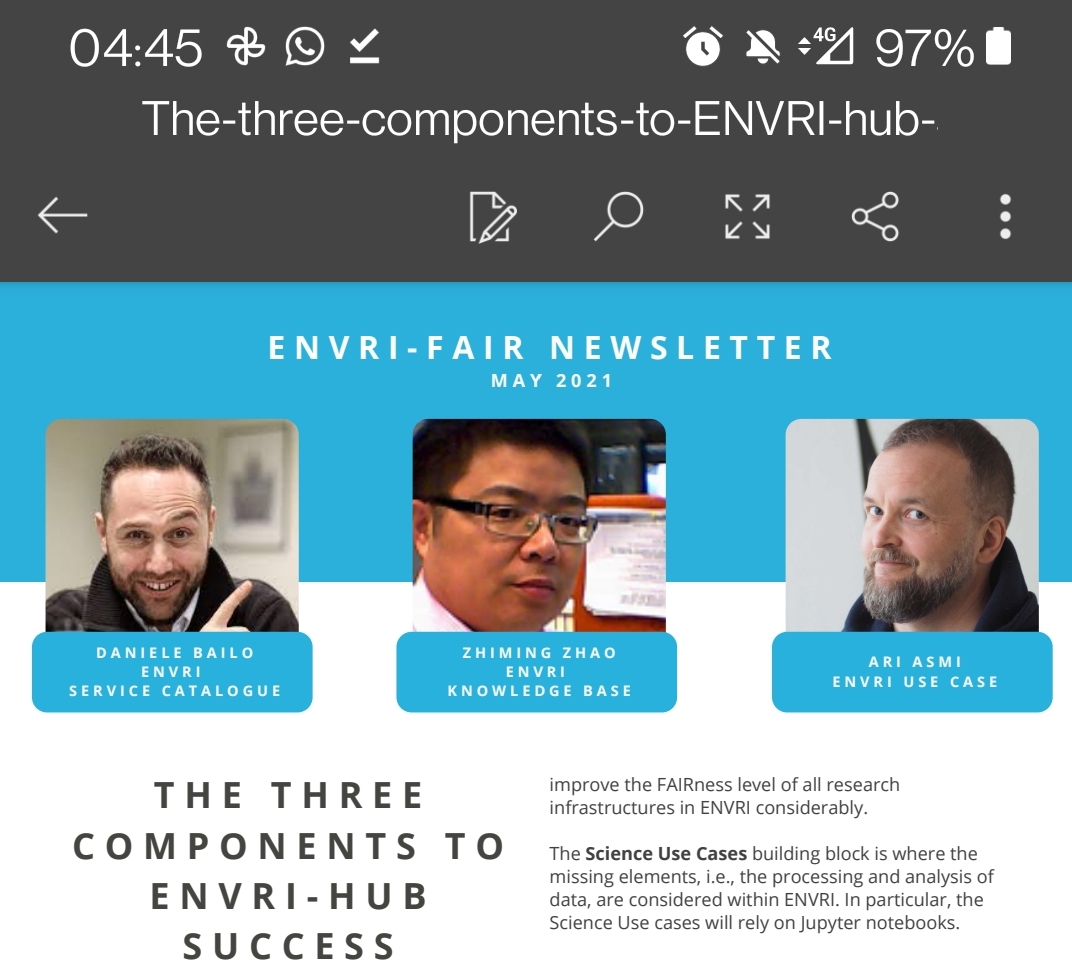
Interview with Daniele Bailo, Zhiming Zhao, and Ari Asmi, who explain the key components forming the ENVRI-hub: the ENVRI Catalogue of Services, the ENVRI Knowledge Base, and the ENVRI Use Cases. Daniele, can you explain in more detail why these three components are crucial to the ENVRI-hub? Daniele: These are three distinct but complementary elements used as containers to support the provision of heterogeneous datasets, services, and software within ENVRI. ...

1 giugno 2021 · Daniele Bailo

The three components to ENVRI-hub success

Interview with Daniele Bailo, Zhiming Zhao, and Ari Asmi who explain to you the key components forming the ENVRI-hub – the ENVRI Catalogue of Services, ENVRI Knowledge Base and ENVRI Use Cases. Daniele, can you explain a little bit more in detail what are these three components crucial to ENVRI-hub? Daniele: These are three distinct but complementary elements used as containers to convey the provision of heterogeneous datasets, services, and software in ENVRI. ...

1 giugno 2021 · Daniele Bailo

Tesi e Tirocini in contesto Europeo - Discipline informatiche

Ti stai per laureare o sei prossimo al tirocinio e ti piacerebbe fare un’esperienza in un contesto dinamico e internazionale? Dai uno sguardo alla proposta di Tirocinio e Tesi dello European Plate Observing System (EPOS). EPOS - European Plate Observing system Istituto Nazionale di Geofisica e Vulcanologia EPOS (www.epos-eu.org) è una infrastruttura di ricerca europea innovativa che ha lo scopo di integrare dati e servizi nel dominio delle scienze della Terra solida. Si tratta di dati e servizi relativi a terremoti, eruzioni vulcaniche, deformazioni geodetiche, osservazioni satellitari e altro, che presentano un alto grado di eterogeneità in termini di tecnologie di data provision, formati e modalità di presentazione delle risorse. L’integrazione avviene tramite un sistema avanzato, gli Integrated Core Services (ICS), che permette di ricercare, scaricare e analizzare dati delle comunità specifiche da un’unica piattaforma e interfaccia web. La proposta di collaborazione rivolta a tirocinanti e tesisti interessati all’utilizzo di tecnologie innovative, mira a contribuire all’ulteriore sviluppo e ottimizzazione del sistema Integrated Core Services, e si sviluppa nei seguenti temi: database relazionali (PostgreSQL) e non relazionali (e.g. MongoDB); sistemi basati sul paradigma dei Microservizi; ottimizzazione e tuning del sistema e dei servizi; creazione di moduli Java e Python per mapping e conversione di dati e metadati; creazione e ottimizzazione interfacce grafiche con AngularJS; integrazione semantica, sviluppo e ottimizzazione di estensioni di DCAT-AP. Le attività da svolgere saranno concordate con lo studente sulla base degli argomenti di interesse. ...

10 giugno 2019 · Daniele Bailo

Theses and Internships in a European Context - Computer Science and IT

Are you about to graduate, or close to starting an internship, and would you like to gain experience in a dynamic international environment? Take a look at the internship and thesis proposal from the European Plate Observing System (EPOS). EPOS - European Plate Observing system Istituto Nazionale di Geofisica e Vulcanologia EPOS (www.epos-eu.org) is an innovative European research infrastructure whose purpose is to integrate data and services in the domain of solid Earth sciences. These include data and services related to earthquakes, volcanic eruptions, geodetic deformation, satellite observations, and more. They are highly heterogeneous in terms of data-provision technologies, formats, and ways of presenting resources. Integration is performed through an advanced system, the Integrated Core Services (ICS), which allows users to search, download, and analyze data from specific communities through a single web platform and interface. This collaboration proposal is addressed to interns and thesis students interested in using innovative technologies. It aims to contribute to the further development and optimization of the Integrated Core Services system, and covers the following topics: relational databases (PostgreSQL) and non-relational databases, for example MongoDB; systems based on the microservices paradigm; optimization and tuning of the system and services; creation of Java and Python modules for mapping and converting data and metadata; creation and optimization of graphical interfaces with AngularJS; semantic integration, development, and optimization of DCAT-AP extensions. The activities to be carried out will be agreed with the student based on their topics of interest. ...
10 giugno 2019 · Daniele Bailo